A local way through
Developing SOS communication that can work within the school without relying on an internet connection.

A FirstAidPH project, built around a human need.
When someone calls for help, the message should have a way through.
 Philippine Science High SchoolMain Campus

A school is full of people who would help. A teacher in the next room. Staff at the clinic. A classmate who knows where to go.
I kept coming back to the space between needing help and being able to ask for it. We spend so much of our day connected that it is easy to make that connection part of the plan. But a weak signal, an interrupted connection, or an unavailable network can change the moment.
For a school, that is a practical question: how does the message get through?
ALON began with the idea that an SOS within a school should have a local path. A way for the school community to communicate that does not depend on the internet being there at exactly the right time.
That is the work I want ALON to do. Give a person who needs help a way to be heard, and give the people ready to respond a clearer place to begin.

A student asking for help
shouldn’t have to ask
for a signal first.
Alon is the Filipino word for wave. I like what that name asks of the project: keep moving outward. Reach someone else.
There is something deeply familiar about people passing a message along until it reaches the person who can help. ALON takes that spirit into a technical problem: building an offline SOS network around the school itself.
The goal is not complicated to explain. A request begins somewhere on campus. It needs to reach designated people who know what to do next. The system should make that connection clearer, even when internet access is unavailable.
The hard work is in the details: how the message moves, how it is understood, and how the system fits into the way a school actually works. That is why the conversation around ALON matters as much as the device on the table.
I want this to be something a Filipino school can see itself in. Something made with attention to its people, its routines, and the moments when those routines are interrupted.
Developing SOS communication that can work within the school without relying on an internet connection.
Designing for real campus routines, designated responders, and the people who will use the system.
A message matters because someone can receive it. ALON connects its technical work to preparedness and practice.
Follow ALON from its first question to what comes next. This record changes as the project moves forward.
ALON takes shape around one question: how can a school request help when the internet is unavailable?
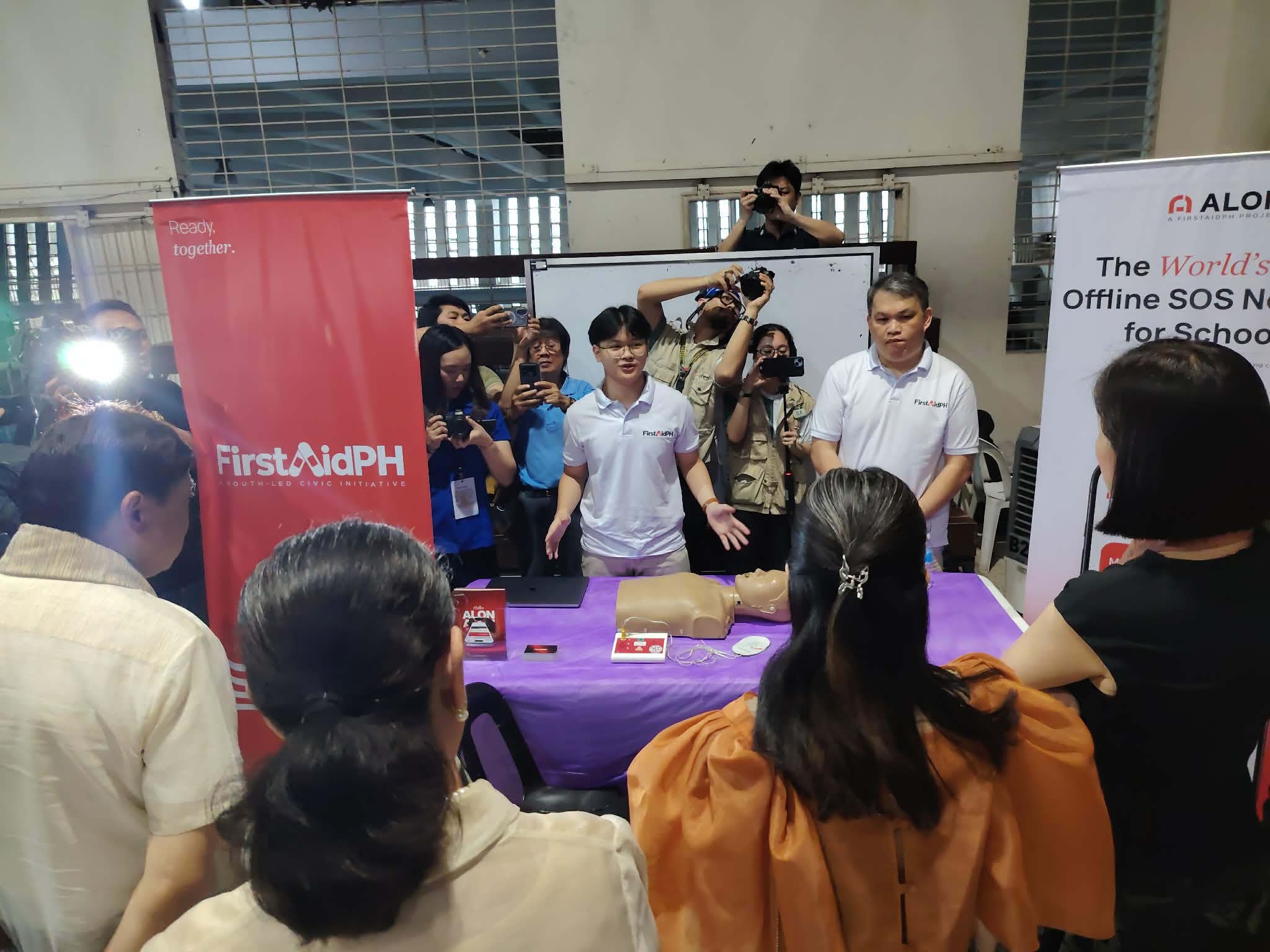
A FirstAidPH demonstration puts ALON in front of people. The conversation moves from an idea to the needs of a school community.
The development work continues: shaping the offline communication flow and how it fits into school preparedness.
The next proposed stage: organise structured evaluation with school stakeholders and emergency-response practitioners.
A future step: agree a pilot scope, test in the school setting, and use what is learned to guide the next version.
We want to hear from educators, emergency medical services practitioners, and people who know the everyday realities of a school. Bring us the questions a design brief can miss.
Talk to us about ALONALON is in development. For an emergency, use your school’s current response procedures.